

 What Is ADHD Perfectionism, Really?
ADHD perfectionism is not the same as classic perfectionism. Classic perfectionism usually comes from a fear of judgment or a belief that self-worth depends on flawless output. ADHD perfectionism shares that fear, but it also comes from somewhere else: a brain that has spent a lifetime being told to try harder, pay closer attention, and stop making careless mistakes.
The American Psychological Association describes perfectionism as holding yourself, or others, to standards well beyond what a situation actually requires. For adults with ADHD, that standard often becomes a form of self-protection. If you were criticized for messy work, missed deadlines, or “not living up to your potential” for years, perfection starts to feel like the only safe outcome. Anything less risks the shame you already know too well.
This is why so many adults with ADHD describe perfectionism as exhausting rather than motivating. ADDitude magazine, a publication focused on ADHD research and lived experience, notes that perfectionism in ADHD often functions as a form of procrastination itself: you delay starting or finishing because the conditions never feel “right enough” to avoid future mistakes or shame.
The irony is sharp. The same brain that struggles with organization, time estimation, and follow-through also demands flawless results from itself. That mismatch, not laziness or lack of willpower, is the real source of the overthinking, stalling, and unfinished projects that define this pattern.
The ADHD Brain: Why Executive Function Struggles Fuel Perfectionism
To understand ADHD perfectionism, you need to understand executive function. Executive function is the set of mental skills that let you plan a task, start it, stay on it, and adjust when things change. CHADD, the national nonprofit for ADHD education and advocacy, identifies working memory, self-regulation, and planning as core executive functions that are commonly affected by ADHD.
When these skills are inconsistent, everyday tasks stop feeling straightforward. You cannot easily judge how long something will take. You lose track of the steps between “start” and “finish.” You struggle to filter which details actually matter. Perfectionism steps in to fill that gap. If you cannot trust your own sense of “enough,” you default to “everything,” because that feels like the only reliable measure.
There is also a neurological piece worth understanding. ADHD is linked to differences in how the brain regulates dopamine, a chemical tied to motivation and reward. According to the National Institute of Mental Health, ADHD is a developmental condition involving ongoing patterns of inattention, hyperactivity, or impulsivity that begin in childhood and often continue into adulthood, frequently affecting planning, organization, and follow-through at work and in relationships.
Put simply: your brain does not reliably tell you a task is “done enough” the way it might for someone without ADHD. Perfectionism becomes the workaround, an external rule that replaces an internal signal that never quite developed the way it needed to.
Why You Overthink Every Decision
Overthinking in ADHD perfectionism rarely looks like careful, methodical analysis. It looks like circling the same three options for an hour, replaying a sent email, or rewriting a text message five times before sending it. This happens for a few connected reasons.
First, working memory difficulties make it hard to hold “the big picture” steady while you evaluate details. Instead of weighing a decision and moving on, you keep re-entering the same thoughts because nothing feels settled. Second, many adults with ADHD have a heightened fear of getting it wrong, shaped by years of being corrected, misunderstood, or told they were not trying hard enough. Overthinking becomes a way to prevent that feeling before it happens.
Third, ADHD brains often struggle to filter relevant information from irrelevant information in real time. Every option, every possible outcome, every “but what if” carries similar weight in your mind, so none of them get resolved. This is exhausting, not indulgent. It is a cognitive filtering issue, not a character flaw.
The result is decision fatigue that shows up even for small choices: what to reply, what to wear, which task to start first. Left unaddressed, this overthinking bleeds into every part of daily life, making simple choices feel disproportionately heavy and slow.
Why You Procrastinate on Things You Actually Care About
This is one of the most misunderstood parts of ADHD perfectionism. People assume procrastination means you do not care. In reality, adults with ADHD often procrastinate hardest on the projects that matter most to them, precisely because the stakes feel higher.
Here is the mechanism: if a task matters, the fear of doing it imperfectly grows too. Starting means risking a flawed first attempt, and a flawed first attempt feels unbearable when your self-worth is already tangled up in your output. So you wait. You wait for motivation, for the “right” mood, for more information, for more time. None of that waiting is really about the task. It is about avoiding the discomfort of an imperfect start.
There is also a structural piece. ADHD affects task initiation, the executive function skill responsible for actually beginning something without external pressure. Without a clear first step or an approaching deadline, many ADHD brains simply cannot generate the internal push to begin, regardless of how much the person cares about the outcome.
This creates a painful loop: caring more increases the pressure to get it right, which increases the fear of starting imperfectly, which increases the delay, which increases the guilt, which increases the pressure again. Over time, this loop convinces people they are unreliable, when the actual problem is a specific, well-documented executive function challenge combined with perfectionistic fear.
The “Last 10 Percent” Problem: Why Finishing Feels Impossible
Many adults with ADHD can start a project in a burst of hyperfocus, and many can work through the middle stretch reasonably well. It is the ending that stalls. Projects sit at 80 or 90 percent complete for weeks or months, close enough to finished that it feels wasteful to abandon them, but never quite done.
Part of this comes from novelty. ADHD motivation is often driven by interest, urgency, or challenge. Once a task stops being new and the initial problem-solving is finished, the dopamine that fueled the early momentum tends to fade. The remaining steps, the formatting, the proofreading, the small corrections, feel disproportionately dull, so the brain resists them.
Perfectionism compounds this. Finishing means submitting the work for judgment. As long as a project stays unfinished, it also stays safe from criticism, because nothing has been evaluated yet. Some part of the brain protects itself by keeping the project “in progress” indefinitely rather than risking it being called finished and imperfect.
This is why adults with ADHD often describe having many almost-finished projects: half-written books, half-built businesses, half-organized closets. It is rarely about ability. It is about a motivation system that drops off near the end, paired with a fear that finishing means exposure to judgment. Recognizing this pattern, rather than labeling it as inconsistency, is often the first step toward changing it.
Rejection Sensitive Dysphoria: The Hidden Fuel Behind ADHD Perfectionism
Many adults with ADHD experience something called rejection sensitive dysphoria, or RSD. ADDitude magazine describes RSD as an intense emotional response to real or perceived rejection, criticism, or failure, one that can feel disproportionate to the situation and difficult to regulate. While RSD is not a formal clinical diagnosis, it is widely recognized among ADHD researchers and clinicians as a common experience within the condition.
RSD explains a lot about ADHD perfectionism. If even mild criticism triggers a wave of shame or emotional pain, then avoiding criticism becomes a survival strategy. Perfectionism is one of the most effective ways to try to prevent that pain, at least in theory. If the work is flawless, there is nothing to criticize. Of course, flawless is rarely achievable, so the strategy backfires: it creates more anxiety, more overthinking, and more avoidance, not less.
RSD also explains why feedback, even constructive feedback, can feel unbearable to adults with ADHD perfectionism. A small suggested edit can feel like a verdict on your competence. This is exhausting for the person experiencing it and confusing for people around them, who may not understand why a minor comment triggered such a strong reaction.
Understanding RSD reframes ADHD perfectionism as an emotional regulation issue as much as a productivity issue. Strategies that only address time management or organization will fall short if the underlying fear of rejection is never addressed directly.
 How This Pattern Shows Up in Everyday Life
ADHD perfectionism rarely stays contained to one area. At work, it can look like missed deadlines because a report never felt ready to submit, or hours spent formatting a slide deck instead of drafting its content. Performance reviews often highlight strong potential alongside inconsistent delivery, which can feel confusing and unfair to the person experiencing it.
At home, it can look like a kitchen renovation that stalls at the painting stage, or a garage that stays half-organized because the “perfect” storage system never gets finalized. Household admin, like taxes or paperwork, often piles up because starting means confronting the risk of doing it wrong.
In relationships, ADHD perfectionism can show up as difficulty accepting compliments, apologizing excessively for small mistakes, or avoiding vulnerable conversations because they might not go perfectly. Friends and partners may see someone who is clearly capable but seems unable to relax into “good enough,” and that gap can create real tension over time.
Financially, it can mean overspending on tools, courses, or systems meant to fix disorganization, without ever using them consistently, because starting to use them imperfectly feels riskier than not starting at all. Across all of these areas, the common thread is the same: high standards colliding with inconsistent follow-through, and a nervous system that reacts strongly to the gap between the two.
Breaking the Cycle: Strategies That Work With Your ADHD Brain
Standard productivity advice often fails ADHD perfectionism because it assumes the problem is motivation or time management alone. Real change usually requires addressing both the executive function side and the emotional side together.
Lower the bar on purpose. Set a “good enough” version of a task before you start, and treat reaching that version as complete success. This interrupts the all-or-nothing thinking that keeps projects stuck at 90 percent.
Use external structure instead of willpower. Timers, checklists, and body doubling, where you work alongside another person even silently, help compensate for inconsistent internal motivation. This is not a workaround for weakness; it is a practical response to a well-documented executive function difference.
Separate starting from finishing. Give yourself permission to produce a rough, imperfect first version with no expectation of quality. Editing a flawed draft is far easier for most ADHD brains than staring at a blank page waiting for a perfect first attempt.
Build in a “done” signal. Because ADHD brains often struggle to sense when a task is complete, create explicit external markers: a checklist, a deadline, or a third-party review. Do not rely on an internal feeling of readiness that may never fully arrive.
Practice noticing RSD in real time. When criticism or feedback triggers a strong reaction, pause before responding. Naming the reaction as RSD, rather than treating it as objective truth about your competence, can reduce its intensity over time.
Get outside support when the pattern feels entrenched. Self-help strategies genuinely help, but many adults with ADHD find that lasting change happens faster with structured, personalized support. This is exactly the kind of work covered by affordable ADHD coaching in Vancouver, which focuses on building systems suited to how your brain actually works, rather than forcing you into generic productivity advice that was never designed for ADHD.
When Self-Help Isn’t Enough
Books, apps, and articles can shift awareness, but awareness alone rarely resolves a pattern this deep. ADHD perfectionism is reinforced by years of lived experience, and it often needs consistent, personalized support to unwind. If you notice that you understand the pattern intellectually but still cannot break it day to day, that is not a failure of effort. It is a sign that you likely need external accountability and a more structured approach than willpower alone can provide.
This is where working with someone who understands both ADHD and perfectionism specifically makes a real difference. A therapist can help address the RSD and shame components. A coach can help translate insight into daily systems, habits, and accountability that fit an ADHD brain rather than fight against it. Many adults find that combining both, or starting with one and adding the other later, produces far more consistent progress than trying to manage everything alone.
If you are based in the Vancouver area and recognize yourself in this pattern, ADHD Coaching Vancouver offers coaching designed specifically around ADHD, including the overthinking, procrastination, and unfinished-project cycle described throughout this article. Getting support is not an admission that you cannot manage your own life. It is a practical step toward finally managing it in a way that actually fits how your brain works.
 Conclusion: Understanding ADHD Perfectionism in Adults
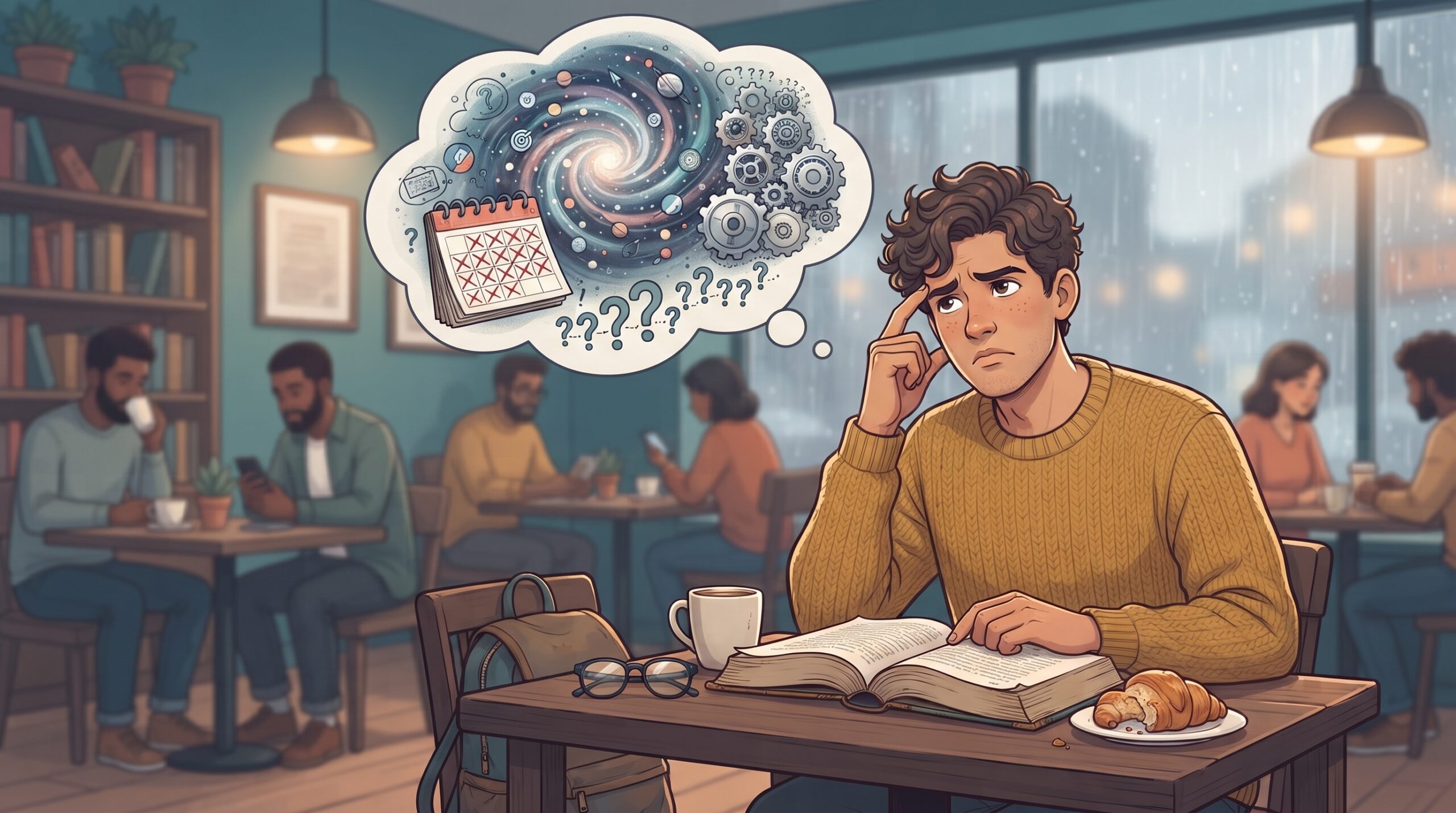
ADHD perfectionism in adults: why you overthink, procrastinate and struggle to finish comes down to a specific, understandable mismatch. Your standards are high. Your executive function is inconsistent. Your nervous system reacts strongly to the risk of criticism or failure. Put those three things together, and overthinking, procrastination, and unfinished projects stop looking like personal failings. They start looking like the predictable result of a brain working exactly as ADHD research describes it working.
The way forward is not to try harder at the same strategies that have not worked. It is to lower the bar deliberately, build external structure where internal structure falls short, and get support that treats the emotional and executive function sides of this pattern together, not separately. Progress here tends to be steady rather than sudden, but it is real, and it is available.
If this pattern has shaped your work, your home life, or your relationships for years, know that it has a name, a clear explanation, and workable solutions. You do not have to solve it alone. If you are ready to get your ADHD in order, consider reaching out to affordable ADHD coaching in Vancouver to start building a system that works with your brain instead of against it.